You received a Bhudhaar number. You checked it. It starts with 99. Months have passed and nothing has changed. No one at the revenue office gives you a straight answer on when — or whether — it becomes permanent.
This is the reality for thousands of landowners across Andhra Pradesh and Telangana. The confusion is not your fault. The government systems explaining this are written in administrative language that answers nothing practically useful.
What Is a Bhudhaar Number — and Why Does It Come in Two Forms?
Aadhaar for Land
Bhudhaar is a unique 11-digit identification number assigned to every land parcel — agricultural, rural, or urban — in Andhra Pradesh and Telangana. Think of it the way you think of your Aadhaar: one number, one identity, no duplication. Except here, the identity belongs to the land, not the person.
The Bhuseva Authority in Andhra Pradesh launched this system under the E-Pragati programme. Telangana adopted its own version, backed by the Bhu Bharati (Record of Rights in Land) Act, 2024 — which received the Governor’s assent on 3 January 2025 and replaced the Dharani portal with the Bhu Bharati portal at bhubharati.telangana.gov.in.
The goal was ambitious: integrate all land-related departments — Revenue, Registration, Survey and Settlement, Municipal Administration, Panchayat Raj, Forest, Endowments, and Wakf — into one unified platform where every parcel of land has a verified digital identity.
The Bhudhaar number was the foundation. But building that foundation turned out to require two stages.
Two Stages, Two Numbers — What the Prefixes Actually Mean
| Feature | Temporary Bhudhaar | Permanent Bhudhaar |
|---|---|---|
| Starting digits | 99 | 28 (AP census code) |
| Basis of assignment | Textual records only | Textual + GPS spatial data |
| Geo-referencing status | Incomplete | Completed |
| Legal standing | Valid for transactions | Full title and loan eligibility |
| Pattadar Passbook-cum-Title Deed | Not issued | Issued |
The 99-prefix tells you one thing: the government has your records on paper — name, survey number, extent — but has not yet placed your land on a GPS-verified map. The 28-prefix tells you the opposite: the land’s corner points are confirmed by coordinates, boundaries are fixed, and the digital record is locked.
What Actually Triggers the Conversion?
Geo-Referencing Completion
There is no application you can submit to convert your Bhudhaar. There is no fee to pay, no counter to visit. The conversion happens automatically — but only after one specific technical event: geo-referencing of your land parcel is completed and validated.
Geo-referencing means government survey teams physically capture the GPS coordinates of your land’s corner points and link that spatial data to your existing textual records in the Revenue database. Until that happens, your number stays at 99.
The technology behind this is not manual chain surveys anymore. Both AP and Telangana now use high-resolution drone imagery and Differential GPS (DGPS) systems to capture accurate boundary coordinates. This removes human measurement error and makes boundary fraud significantly harder.
What “Textual Data” vs. “Spatial Data” Means for Your Number
Land records have always had two layers. Textual data is everything written — your name, the survey number, the extent in acres or guntas, your Aadhaar or voter ID, the classification of the land. This data is what gets you a temporary Bhudhaar. It confirms you are in the system.
Spatial data is the physical layer — the actual sketch of the land as it sits on the ground, with coordinates for each boundary corner, measurements, and the positions of adjacent plots. This is what converts your number to permanent. Without spatial data linked, the government cannot guarantee that the land on paper matches the land on the ground.
A temporary Bhudhaar without geo-referencing is like an ID card without a photo. The name is there. The number is there. But the verification is incomplete.
Special Cases That Delay or Block the Trigger
Certain land situations will prevent geo-referencing from completing even after survey teams reach your area.
If your land is under active dispute or litigation, it receives a 99-prefix temporary number specifically because boundary confirmation cannot proceed while legal proceedings are active. The conversion will not happen until the dispute is resolved through proper revenue channels.
Lands placed in “Part-B” status — a classification used in Telangana for parcels with overlapping claims, unclear succession, or records flagged during forensic audit — are temporarily hidden from public transaction searches entirely. The Permanent Bhudhaar will not be issued while Part-B status remains unresolved.
Lands currently undergoing re-registration, boundary re-demarcation, or sub-division after a parent survey number was split will also face delays. The system needs a settled record before it can lock spatial coordinates.
How Long Does the Conversion Actually Take?
There Is No Fixed Government Timeline — Here’s Why
There is no official number of days, weeks, or months that applies uniformly. Anyone who gives you a fixed answer is guessing.
The conversion timeline depends entirely on when the government’s drone survey teams complete and validate the geo-mapping for your specific village, ward, or mandal. This rollout is zone-based and progresses in batches across districts. If your area has been surveyed and data has been validated, conversion can happen relatively quickly — sometimes within weeks. If your area is still in the queue, you may wait months.
In Telangana, the Bhu Bharati portal launched in April 2025 with a four-mandal pilot before statewide expansion began. That means geo-referencing is still actively in progress across much of the state. AP’s Bhuseva project has been running longer, with around 53% of temporary numbers having been generated as far back as 2019 — but completion of spatial verification has been phased and uneven across districts.
Realistic Scenarios and What Affects Your Wait
| Your Situation | Realistic Expectation |
|---|---|
| Land in a mandal where drone survey is completed | Conversion possible within weeks after data validation |
| Land in mandal where survey is pending | Months — depends entirely on rollout schedule |
| Land under dispute or litigation | Indefinite — conversion blocked until legal resolution |
| Land in Part-B status | Blocked — requires MRO resolution first |
| Post-NALA conversion (non-agricultural) | 48–72 hours after portal shows “Approved” status |
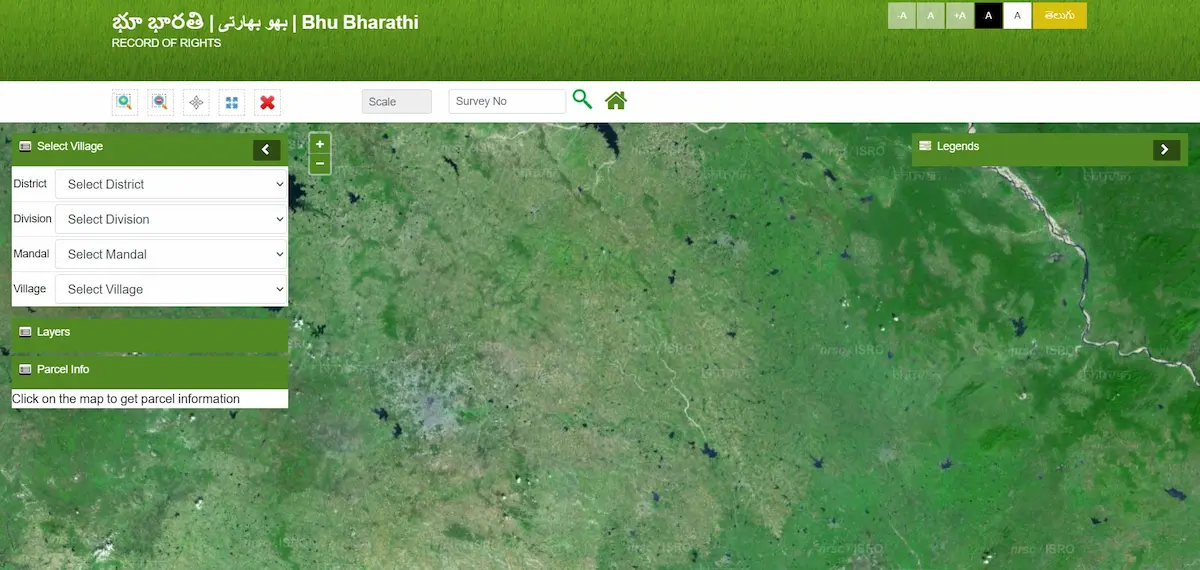
Check whether your mandal’s survey has been completed by visiting the official portal and checking your land details. If the spatial coordinates appear alongside your record, geo-referencing is done and conversion should follow. If only textual data appears, you are still waiting.
What You Can (and Cannot) Do With a Temporary Bhudhaar
What Remains Fully Functional
A temporary Bhudhaar number is not a blocked number. Registration, mutation, and routine revenue transactions all proceed normally with a 99-prefix number. Banks, under both the AP and Telangana frameworks, can verify land records electronically. The physical pattadar passbook is not mandatory for loan processing where digital RoR is accessible. You can also download your E-Bhudhaar card from the portal and use the M-Bhudhaar mobile version at any Mee Seva centre.
In practical terms: buying, selling, gifting, inheriting, or mortgaging land with a temporary Bhudhaar is legally permitted. The number is valid in the system.
What Is Restricted or Risky During the Temporary Phase
What you cannot do confidently with a temporary Bhudhaar is resolve a boundary dispute. Without GPS-confirmed corner coordinates, there is no objective reference point to determine where your land ends and someone else’s begins. This makes encroachment claims significantly harder to contest.
You also cannot receive a Pattadar Passbook-cum-Title Deed — which is the highest-value document the system produces, useful for formal loan applications and inheritance documentation — until the permanent number is issued.
And if your land sits in Part-B status, it is invisible to buyers on the public portal, which effectively freezes market transactions regardless of your intent.
Your Action Checklist While Waiting for Permanent Bhudhaar
Step 1 — Verify Your Current Bhudhaar Status Online
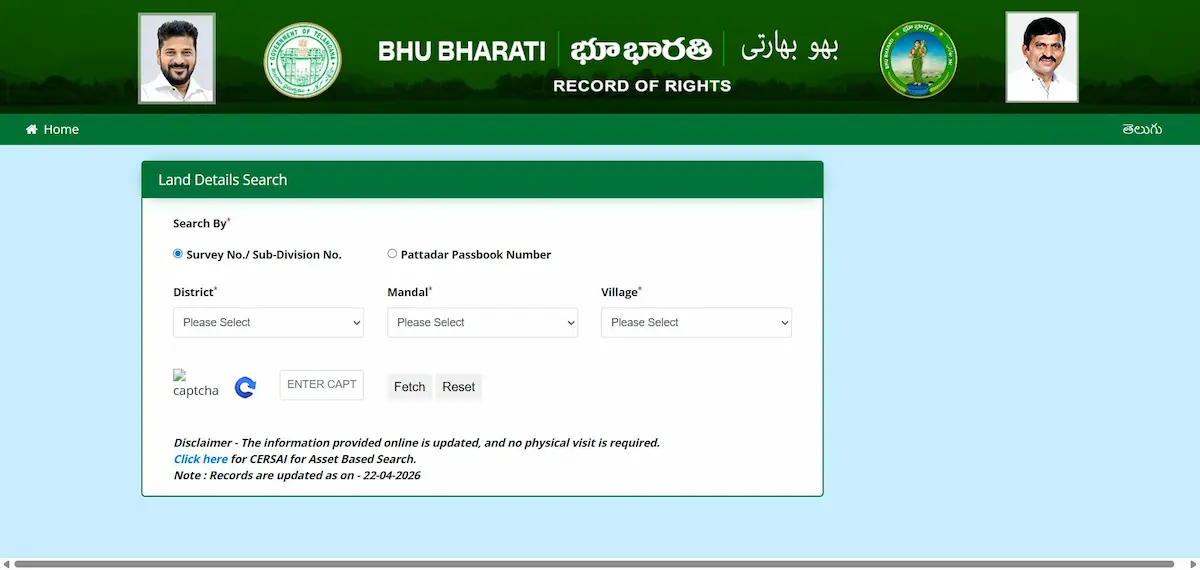
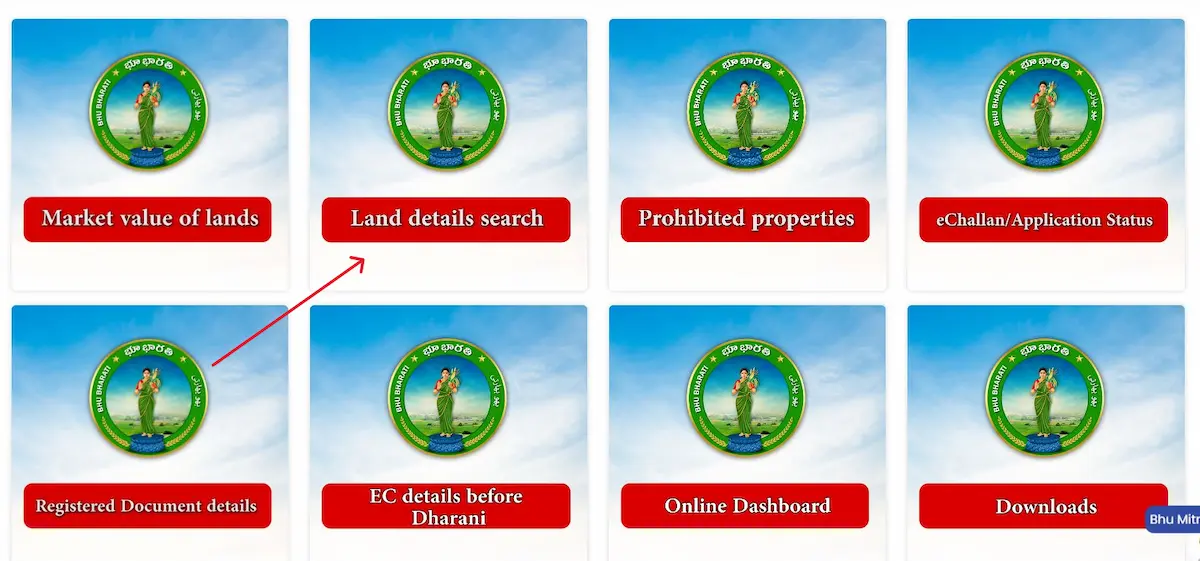
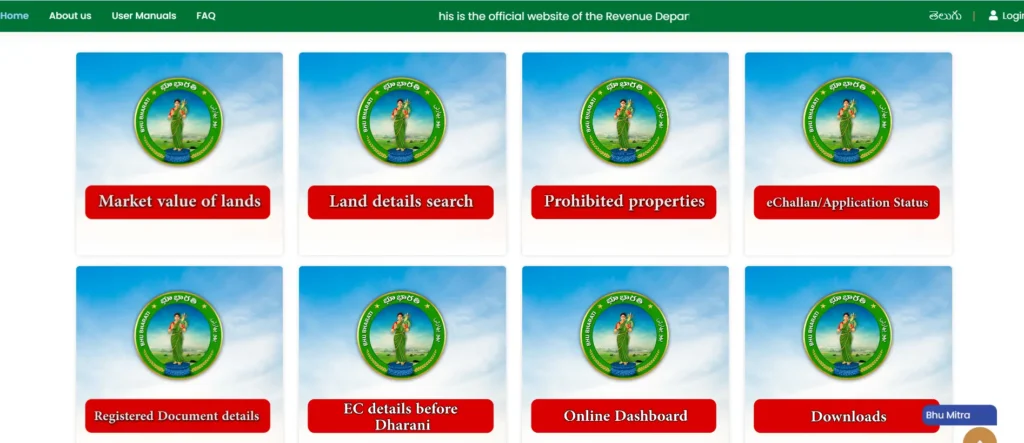
Go to bhubharati.telangana.gov.in (Telangana) or bhuseva.ap.gov.in (AP). Navigate to Land Details Search under Information Services. You do not need to log in for this. Select your District, Mandal, and Village, then enter your Survey Number or Pattadar Passbook Number. If the Bhudhaar shown begins with 99, geo-referencing is pending. If it begins with 28, you are permanent. Screenshot this result and keep a local copy.
Step 2 — Ensure Your Textual Records Are Error-Free
Any mismatch in your name, survey number, or land extent will delay or block geo-referencing validation when survey teams reach your area. Even a spelling variation in your name between the registration deed and the revenue record can cause the system to flag the parcel for manual review.
Apply for mutation immediately if there has been any change in ownership — sale, gift, partition, inheritance — that has not been formally recorded. Under the Bhu Bharati Act, mutation must be filed for all such changes. In Telangana specifically, the RoR Corrections window under the 2025 Act allowed applications until April 13, 2026. If you have pending corrections and have not acted, check the current deadline with your local Tahsildar’s office immediately.
Step 3 — Resolve Disputes or Part-B Status Proactively
If your land is in Part-B, waiting is the worst strategy. Under the Bhu Bharati Act, Mandal Revenue Officers are now empowered to conduct on-site village visits — called Revenue Sadassus — to resolve Part-B disputes directly in the field. Visit your MRO with your registered sale deed, pattadar passbook, and Aadhaar. Do not wait for the system to call you.
Step 4 — Link Aadhaar to Your Land Record
Aadhaar-Bhudhaar linkage is not mandatory yet in all zones, but it significantly speeds up identity verification when geo-referencing data is being cross-validated by the Revenue department. This linkage can be done at any Mee Seva centre for a standard service fee. Bring your Aadhaar, survey number, and any existing pattadar passbook.
Step 5 — Download and Preserve Your Temporary Bhudhaar Card
Both temporary and permanent Bhudhaar cards are accessible online. Download the E-Bhudhaar from the portal now and store a certified copy at your nearest Mee Seva centre. If your portal shows a temporary number, this document still carries the legal weight of your current Record of Rights. Do not wait for permanent status before archiving your records.
What Changes the Moment Your Bhudhaar Becomes Permanent
The change is not merely cosmetic. When geo-referencing completes and validation passes, several things happen simultaneously:
Your 11-digit number changes. The 99-prefix is retired permanently. A new 28-prefix number is assigned and becomes the only number valid for future transactions. The previous temporary number is discarded from the system.
GPS coordinates for all four boundary corners of your land are locked in the Record of Rights. From that point, your land parcel has a fixed, state-guaranteed spatial identity. Any encroachment can be challenged against GPS-confirmed evidence — not just a paper measurement.
You become eligible for a Pattadar Passbook-cum-Title Deed. This is the document with full legal evidentiary value — admissible in court, accepted by banks for agricultural and housing loans, and recognized across all eight integrated departments.
All integrated departments — Revenue, Registration, Survey, Panchayat Raj, Municipal Administration, Forest, Endowments, and Wakf — can now cross-verify your land record in real time without requiring separate submissions to each authority.
AP vs. Telangana — Is the Conversion Process the Same?
The core mechanism — geo-referencing triggers conversion — is identical in both states. The difference is in governance, portal, and legislative framework.
| Feature | Andhra Pradesh | Telangana |
|---|---|---|
| Portal | bhuseva.ap.gov.in | bhubharati.telangana.gov.in |
| Governing law | Bhudhaar framework, E-Pragati | Bhu Bharati Act, 2024 (Act No. 1 of 2025) |
| Permanent prefix | 28 (AP vehicle registration code) | 28 |
| Launch of digital system | 2017–2019 (phased) | April 14, 2025 |
| Previous portal replaced | N/A (original system) | Dharani portal |
| Local authority for disputes | Revenue Divisional Officer | Tahsildar / MRO (under Bhu Bharati Act) |
In Telangana, the Bhu Bharati Act explicitly decentralized record-correction power back to Tahsildars and Revenue Divisional Officers — a deliberate reversal of the Dharani-era centralization that had frustrated landowners for years. In AP, the Bhuseva Authority oversees the process through an inter-departmental committee.
If you are in AP, the Bhuseva portal remains your primary reference. If you are in Telangana, the Bhu Bharati portal has replaced Dharani and all historical records from Dharani have been migrated.
FAQs
What is the difference between temporary and permanent Bhudhaar?
Temporary Bhudhaar (prefix 99) is assigned when geo-referencing of the land parcel is incomplete. Permanent Bhudhaar (prefix 28) is issued after GPS coordinates of the land’s boundaries are confirmed and validated in the Record of Rights.
How long does Bhudhaar conversion take?
No fixed timeline exists. It depends entirely on when government survey teams complete drone-based geo-referencing for your specific mandal or village. Surveyed areas can see conversion within weeks; pending zones may wait months.
Can I register or sell land with a temporary Bhudhaar?
Yes. Revenue transactions including registration and mutation proceed normally with a temporary Bhudhaar. However, Part-B status or active disputes can block specific transactions regardless of the number type.
Why is my Bhudhaar number still starting with 99?
Geo-referencing of your land parcel has not been completed. Check whether your mandal’s drone survey is done by searching your land details on the official portal. Also verify that your textual records have no errors that could delay validation.
Does a temporary Bhudhaar card work for bank loans?
Yes. Banks can verify land records electronically under both state frameworks and cannot demand a physical passbook where digital RoR is accessible. The temporary number is a valid identity for most loan processing purposes.
How do I check if my Bhudhaar is temporary or permanent online?
Visit the official Bhu Bharati portal (Telangana) or Bhuseva portal (AP). Go to Land Details Search, enter your survey number, and check the Bhudhaar number displayed. A 99-prefix means temporary; a 28-prefix means permanent. No login is required for this check.
Conclusion
Three things control your Bhudhaar conversion: the geo-referencing trigger, the survey rollout timeline in your area, and the accuracy of your existing land records.
You cannot speed up the government’s drone survey schedule. But you can make sure your records are clean and ready when the survey arrives. You can resolve Part-B status or disputes now rather than later. You can download your current temporary card, link your Aadhaar, and monitor your land’s status on the official portal.
The landowners who get caught with problems at conversion time are almost always those who assumed waiting was enough. It is not. The system moves on your records — make sure those records are worth moving on.
Check your Bhudhaar status today at bhubharati.telangana.gov.in (Telangana) or bhuseva.ap.gov.in (AP) — and if your records have corrections pending, act before your state’s current deadline.