If You found a piece of agricultural land in Telangana. The seller says it’s clean. You want to believe them — but before you hand over a single rupee, one document tells you the truth: the Bhu Bharathi EC. Not the Pattadar Passbook. Not the ROR-1B. The Encumbrance Certificate.
It shows every registered transaction on that land — every sale, every mortgage, every court attachment — going back decades. If someone pledged that land to a bank in 2019 and never cleared the loan, the EC will show it. If ownership changed three times without proper documentation, the EC will show gaps. What the seller tells you is one story. What the EC shows you is the legal record.
In this article you will learn exactly what the Bhu Bharathi EC is, how to get it online in 2026, how to read what it returns, and what to do when something doesn’t look right.
What Is the Bhu Bharathi EC?
The Encumbrance Certificate is an official record of all registered transactions tied to a specific agricultural land parcel. Every sale deed, mortgage deed, gift deed, court attachment, or partition deed that was formally registered at the Sub-Registrar Office (SRO) gets logged against that parcel’s survey number. The EC pulls that entire log and presents it chronologically.
Two things the EC does not prove — and this matters enormously:
- It is not proof of ownership. For that, you need the Pattadar Passbook or the ROR-1B document from the Bhu Bharathi portal. The EC only tells you what happened to the land. It doesn’t confirm who legally holds it today.
- It does not capture unregistered transactions. Oral agreements, possession transfers without a registered deed, pre-1983 sales — none of these appear on the EC. A clean EC means no registered encumbrances. It does not mean the land is free of all claims.
With that context set, the EC is still the single most important document in agricultural land due diligence in Telangana. Banks will not approve a crop loan or a mortgage without it. MROs will not process a mutation without it. Courts rely on it in ownership disputes. And buyers who skip it often discover problems only after registration — which is far too late.
Bhu Bharathi EC vs. IGRS EC — Which One Do You Need?
Telangana operates two separate portals for property records, and many people pull the wrong EC for their property type.
| Factor | Bhu Bharathi EC | IGRS EC |
|---|---|---|
| Land type | Agricultural only | Urban plots, apartments, commercial |
| Portal | bhubharati.telangana.gov.in | registration.telangana.gov.in |
| Records coverage | Post-2025 (replacing Dharani) | 1983 onwards |
| Pre-1983 records | Visit SRO in person | Visit SRO in person |
The Bhu Bharathi portal is specifically for agricultural land, introduced in 2025 when the Congress government replaced the Dharani system under the Telangana Bhu Bharathi (Record of Rights in Land) Act, 2025.
If your land was agricultural land that has been NALA-converted to residential or commercial use, check both portals. The transaction history before conversion will sit in the Bhu Bharathi system, and anything after conversion may be in IGRS. Missing one leg of that history is where buyers get blindsided.
How to Get Your Bhu Bharathi EC Online in 2026
What You Need Before You Start
Have these details ready before you open the portal:
- District, Mandal, Village — exactly as they appear in the land record
- Survey Number + Sub-Division (e.g., 142/A — the sub-division matters; “142” and “142/A” return different results)
- Khata Number — especially useful if you have multiple parcels under one ownership
- 11-digit Bhudhaar Number — the fastest and cleanest search method if you have it
For a simple view of the EC, no login is required. To download a certified copy with a digital signature — the version banks and courts accept — you need to log in and pay the document fee.
If your Bhudhaar starts with 99, your land is still in the temporary geo-referencing stage. The EC may be incomplete or pending. For a full explanation of what that prefix means for your record status, see the guide on Temporary to Permanent Bhudhaar.
The Exact Process on the Portal
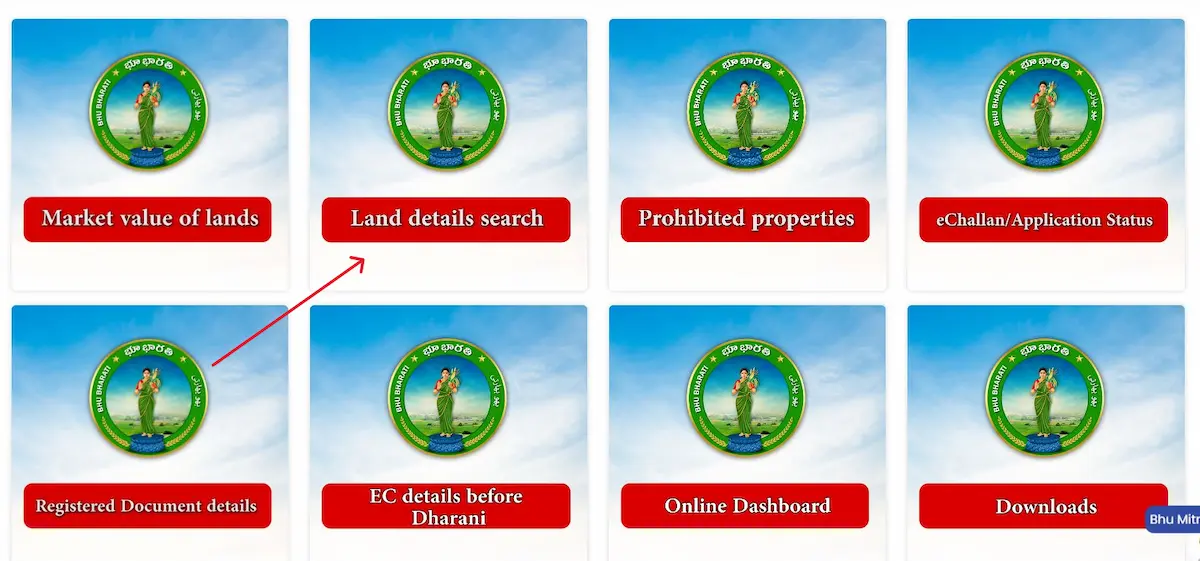
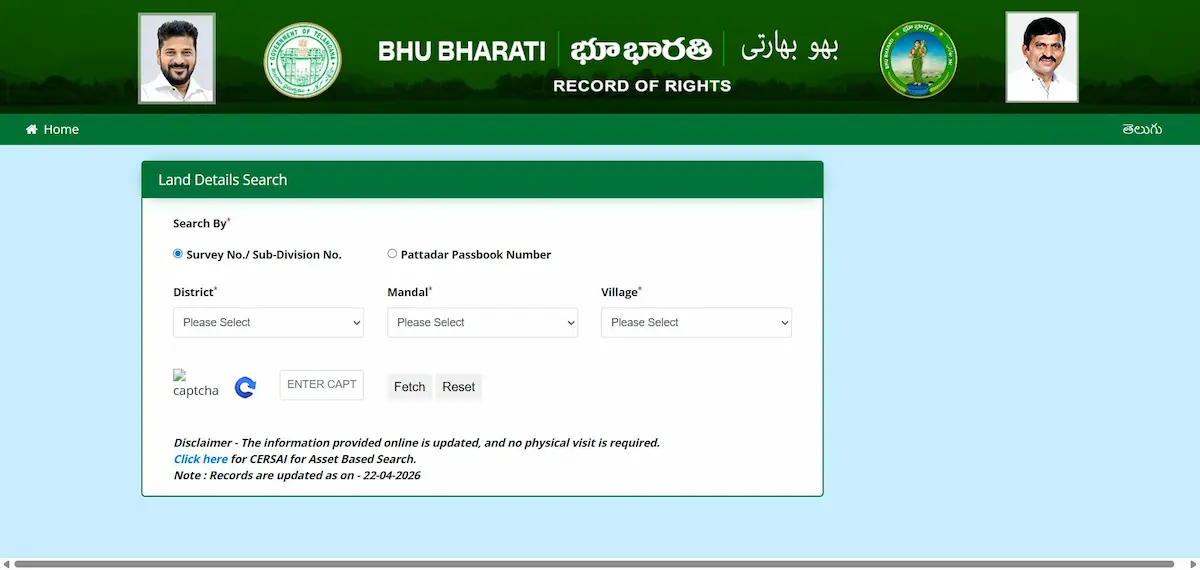
Go to bhubharati.telangana.gov.in and navigate to Information Services → Land Details Search. You don’t need to log in for this first step. Select your District, Mandal, and Village in that order — the next dropdown only populates after the previous one loads.
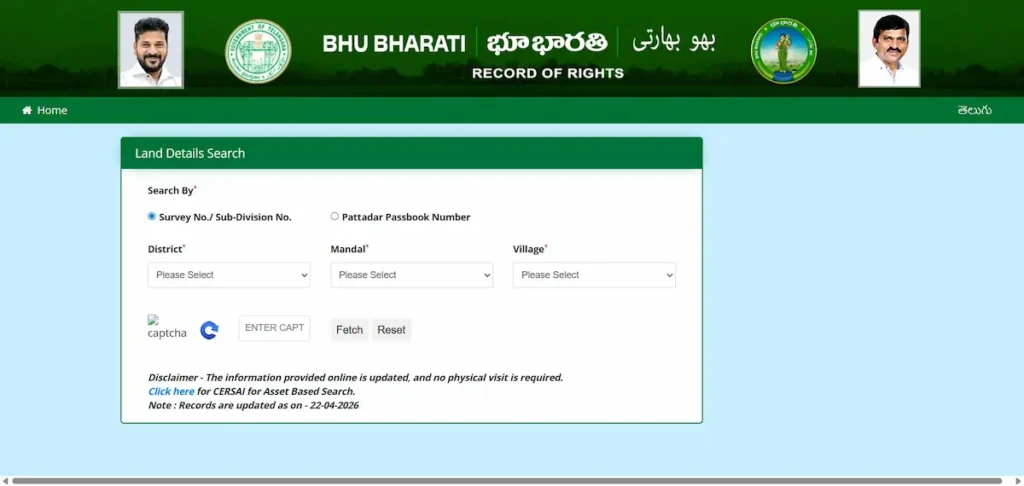
Once the land record appears, the EC data is accessible from that same screen or through the dedicated Encumbrance Search section. Choose your search period — most banks require a 30-year EC as the gold standard. Shorter periods are fine for general verification, but anything involving a loan or high-value purchase needs the full 30 years.
For a certified downloadable copy: log in with your mobile number and OTP, submit the eChallan payment (₹20–₹200 depending on the period), and download the digitally signed PDF. That signed copy is the one accepted by banks, courts, and registration offices.
The process is straightforward once you have your details ready. If you run into trouble finding the land record itself before reaching the EC, the Bhu Bharathi Land Details Search guide covers every search method and error fix in detail.
When to Visit the SRO Instead
The portal’s EC database covers digitized records, but for transactions before 1983, you must visit the Sub-Registrar Office that has jurisdiction over the village. This is particularly relevant for inherited land, ancestral agricultural plots, and parcels held by the same family for generations. If you are buying land with a long ownership history, ask the SRO for a manual search going back as far as the records allow. The IGRS helpline (1800-599-4788) can confirm if older records for a specific SRO have been digitized.
How to Read Your Bhu Bharathi EC — Field by Field
Downloading the EC is step one. Understanding what it’s actually telling you is where most people fall short.
Form 15 vs. Form 16 — the EC comes in one of two forms. Form 15 is issued when the portal finds registered transactions on the parcel. Form 16, commonly called a Nil EC, is issued when no transactions are found for the searched period. A Nil EC is not necessarily a green flag — it means no registered transactions were found, not that the land is free of all disputes.
What each transaction type means:
- A Sale Deed entry means ownership changed hands through a registered transaction on that date. If there are multiple sale deed entries for the same parcel within a short period, verify each one carefully — it could indicate contested ownership or fraud.
- A Mortgage or Hypothecation entry means the land was pledged to a bank or lender. If this entry does not have a corresponding Discharge Deed or Release Deed, the mortgage may still be active. A bank clearance letter alone is not enough — the discharge must have been formally registered at the SRO to appear as cleared on the EC.
- A Court Attachment entry is the most serious red flag. It means a court has legally frozen the property. No transaction — sale, gift, or transfer — can proceed until the court order is lifted. If you see this on an EC, stop the transaction until the legal status is resolved.
- A Gift Deed or Partition Deed changes ownership within a family. It’s not a red flag, but it tells you the land changed hands through family arrangement rather than sale — important context for verifying the seller’s authority.
- The Mutation EC is a specific variant that shows ownership changes due to inheritance or sale and is commonly required when filing succession applications under Section 7 of the Bhu Bharathi Act, 2025.
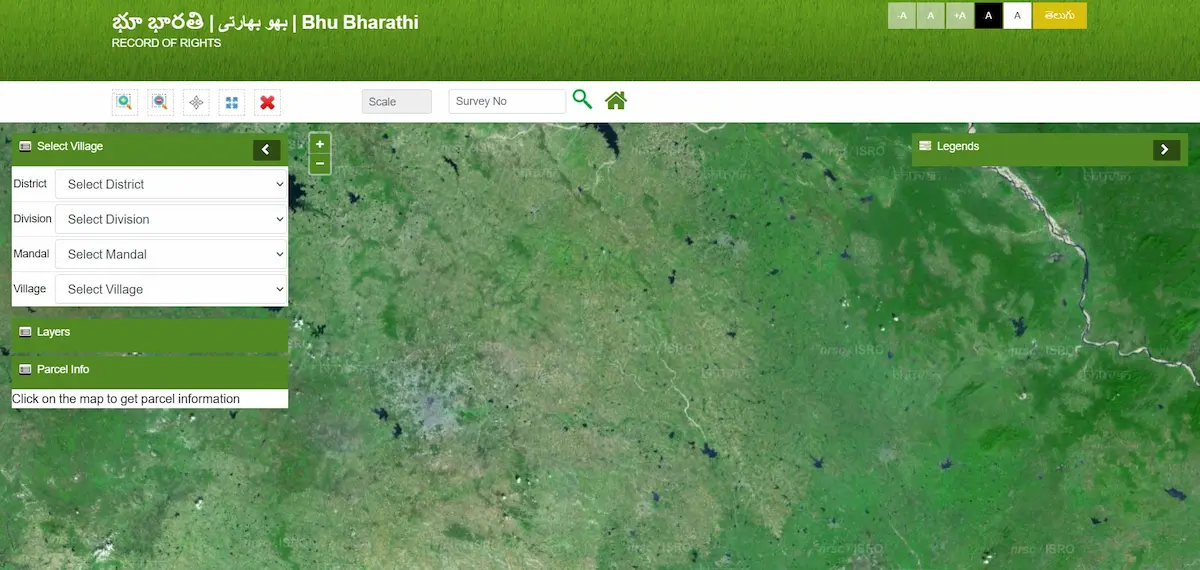
To confirm that the physical boundaries behind all this transaction history match current GPS-surveyed reality, cross-reference the EC with the Bhu Bharathi Map — the cadastral GIS tool that shows your land parcel as a boundary polygon.
5 Situations Where a Bhu Bharathi EC Is Mandatory
- 1. Buying agricultural land. The EC confirms the seller is the sole legal owner and that no bank holds an active charge on the property. No EC, no safe purchase.
- 2. Applying for a crop loan or Kisan Credit Card. SBI, HDFC, ICICI, LIC Housing Finance — all require an EC, typically covering 30 years, before approving any agricultural loan or mortgage.
- 3. Processing a mutation after sale. The Mandal Revenue Officer (MRO) will verify EC transaction history before updating pattadar name records. A missing or incomplete EC will stall the mutation.
- 4. Succession and inheritance transfer. Legal heirs applying under Section 7 of the Bhu Bharathi Act must submit the EC to confirm no existing encumbrances are attached to the property before the MRO processes the succession.
- 5. Legal disputes and court proceedings. Courts accept the EC as admissible documentary evidence of property history. In boundary or ownership disputes, the EC combined with the GIS land map record is often the deciding reference.
Common EC Problems — and What They Actually Mean
EC Shows an Old Mortgage That Was Already Repaid
This is the most common and frustrating situation. The loan was cleared years ago, the bank issued a clearance letter — but the EC still shows the mortgage as active.
- The reason: the bank never registered a Discharge Deed or Release Deed at the SRO. The portal only reflects what was formally registered. Until that discharge deed is registered, every EC will continue to show the mortgage as outstanding, regardless of what any bank letter says.
- And its fix: go to the bank, obtain the discharge document, and get it registered at the SRO. Once the registration is done, the next EC you pull will show the encumbrance as cleared.
Survey Number Returns No EC History
Three reasons this happens: the record was recently migrated from Dharani and is still syncing (wait 48–72 hours and try again); the parcel is in Part-B status due to a contested claim during the forensic audit (requires an MRO visit to resolve); or you entered the wrong sub-division — “142” instead of “142/A” will return the parent record, not your specific parcel.
Try the Bhudhaar search if available — it bypasses the sub-division issue entirely and returns the exact parcel.
Bhu Bharathi EC — FAQs
Is Bhu Bharathi EC free?
Viewing the EC history online is free. Downloading a certified copy with a digital signature costs ₹20–₹200 depending on how many years you request.
Is the Bhu Bharathi EC proof of ownership?
No. It shows transaction history only. Ownership proof is the Pattadar Passbook or the ROR-1B document — not the EC.
How many years of EC should I request before buying land?
Minimum 13 years for routine verification. 30 years is the standard for bank loans and any high-value transaction. For ancestral property, go back as far as the digitized records allow.
What is Form 15 and Form 16 in EC?
Form 15 lists all recorded registered transactions. Form 16 (Nil EC) confirms no transactions were found for the searched period — not a guarantee of clean title.